
How to Thaw a Frozen Turkey Safely
Three tested thawing methods, how long each one takes, and the mistakes that put your guests at risk.
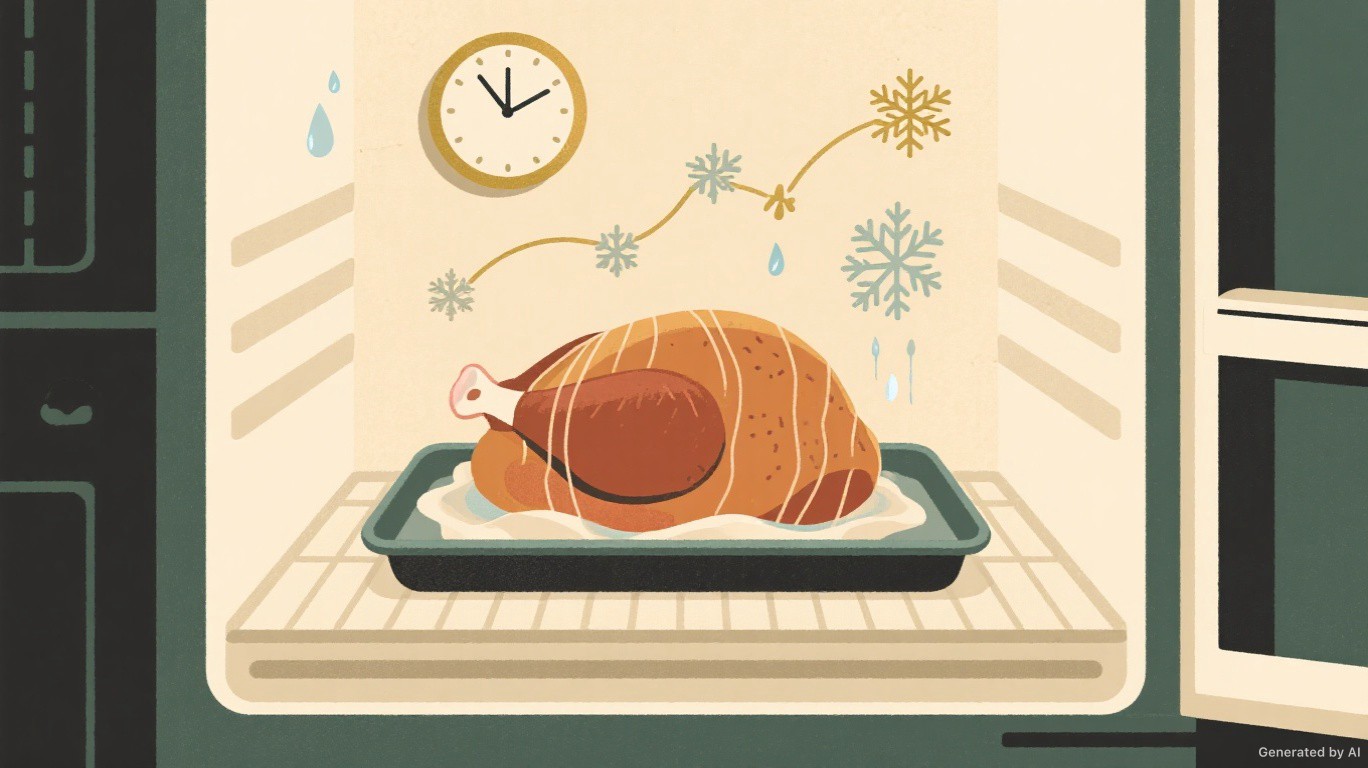
Thawing is where many turkey dinners go wrong. A bird that is still frozen at the center cooks unevenly, while a bird thawed on the counter can spend hours in the temperature range where bacteria multiply fastest.
The safest default is refrigerator thawing. It takes planning, but it keeps the bird at a controlled temperature and gives you the most flexible schedule. Use the Turkey Thawing Calculator to work backward from your serving time.
Choose the Method Before You Buy
| Method | Planning rate | After thawing |
|---|---|---|
| Refrigerator | About 24 hours per 4–5 lb | Holds 1–2 days before cooking |
| Cold water | About 30 minutes per lb | Cook immediately |
| From frozen | About 50% longer cooking | Remove giblets when cavity loosens |
Do not combine a partially counter-thawed bird with a long delay. If the schedule changes, move the turkey into the refrigerator or use the cold-water method correctly.
Refrigerator Thawing
This is the method to plan for. Allow 24 hours for every 4–5 lb (about 2 kg) of turkey, and keep the refrigerator at 40°F (4°C) or below.
- 12 lb bird: about 3 days
- 16 lb bird: about 4 days
- 20 lb bird: about 5 days
Leave the turkey in its wrapper on a rimmed tray so drips cannot contaminate other food. Place it on the lowest shelf, away from ready-to-eat food. Once thawed, it can remain refrigerated for another 1–2 days before cooking.
Start earlier than the minimum if the bird is tightly packed, your refrigerator runs warm, or the turkey is larger than the listed examples. A little extra refrigerator time is easier to manage than a frozen center on cooking day.
Cold Water Thawing
Faster, but hands-on. Keep the turkey in leakproof packaging and submerge it in cold tap water. Change the water every 30 minutes, allowing about 30 minutes per pound. A 16 lb bird takes roughly 8 hours. Cook it immediately after thawing.
Use a clean sink, stockpot, or food-safe container large enough to keep the bird submerged. Weigh it down if necessary, and keep raw turkey water away from counters, produce, and ready-to-eat foods. Wash and sanitize the sink and nearby surfaces when you finish.
Cooking From Frozen
You can roast a turkey straight from frozen when the package and recipe allow it. Expect it to take about 50% longer than a thawed bird, and remove the giblets partway through once the cavity has loosened. Do not use a frozen bird for deep-frying: ice and hot oil are a dangerous combination.
What Not to Do
Never thaw on the counter, in a warm oven, or in hot water. The outer layer climbs past 40°F long before the center gives up its ice, and that is exactly the window food-safety guidance is written to avoid. Do not rinse the turkey; splashing spreads raw poultry juices without making the bird safer.
Whichever method you pick, confirm doneness with a thermometer rather than a clock. Check the thickest part of the breast, the innermost thigh, and the innermost wing, avoiding bone. The turkey should reach 165°F (74°C) in each measured area.
A Simple Backward Plan
- Write down your serving time.
- Use the bird’s packaged weight to calculate refrigerator or cold-water thawing time.
- Add a one-day cushion for refrigerator thawing whenever possible.
- Plan brining and seasoning only after the turkey is safely thawed.
- Add cooking and resting time separately; thawing time is not cooking time.
If the Turkey Is Still Frozen
Do not panic and do not leave it on the counter. Move to cold-water thawing if you have enough hours, or cook from frozen if your cooking method supports it. A partially frozen cavity may need additional time before the giblets can be removed. Use temperature readings in multiple locations rather than relying on the original timetable.
Final Safety Check
Keep raw turkey cold, prevent drips, wash hands and surfaces after handling, and cook to 165°F (74°C). For current food-safety details, consult the USDA Food Safety and Inspection Service guidance linked from the site’s methodology and safety pages.
Sources
- Turkey Basics: Safe ThawingUSDA Food Safety and Inspection Service · Verified 2026-08-06
Refrigerator thawing, cold-water thawing, and safe handling guidance.
- Safe Minimum Internal Temperature ChartUSDA Food Safety and Inspection Service · Verified 2026-08-06
The 165°F (74°C) minimum internal temperature for poultry and stuffing.