
Turkey Brining Guide: Dry vs. Wet Brine, Ratios, and Time
Choose dry or wet brine, calculate salt and timing, avoid over-brining, and identify pre-brined turkeys before seasoning.
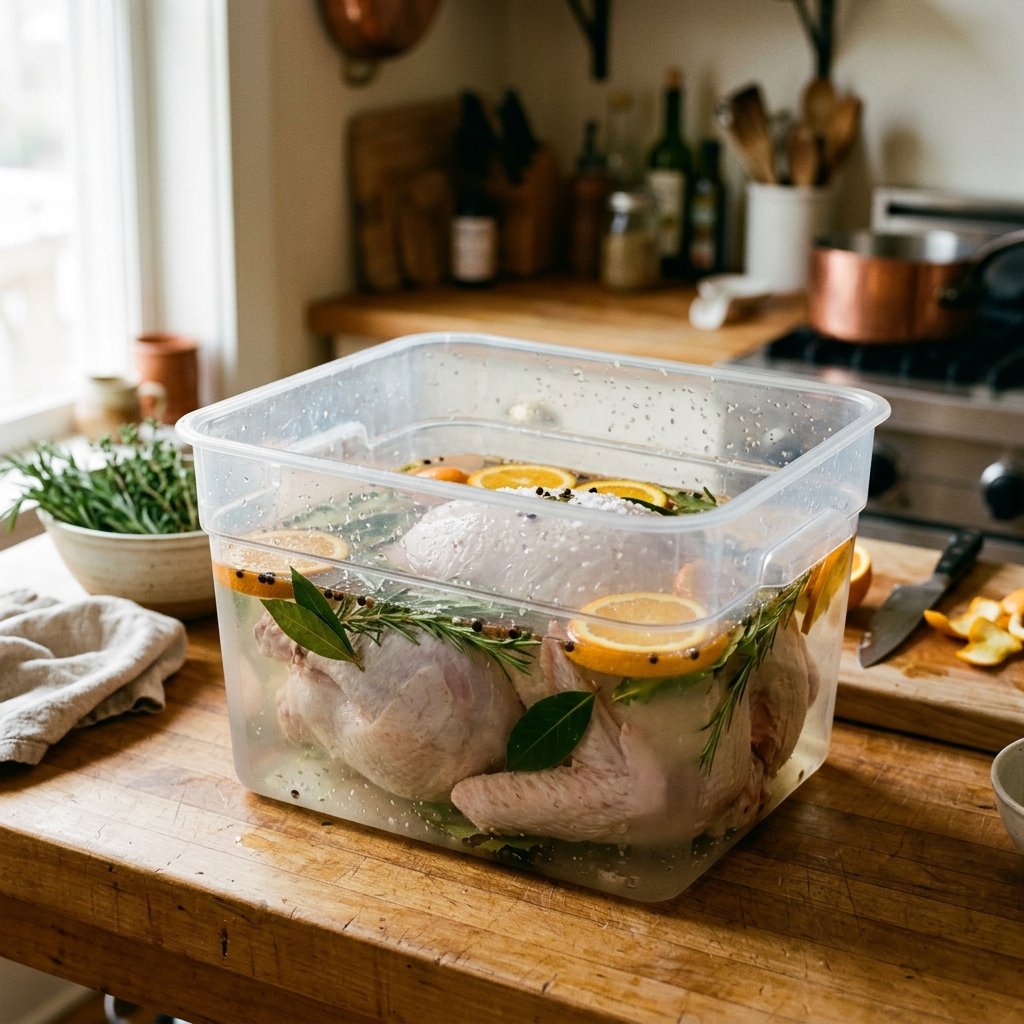
Dry brining is usually the simplest choice: it needs less refrigerator space and supports crisp skin. Wet brining can be forgiving but requires a food-safe container, a fully submerged bird, and continuous refrigeration.
Check the Label First
Do not brine a turkey labeled self-basting, enhanced, injected, kosher, or packed in a salt solution without adjusting the recipe. Additional salt can make a pre-seasoned bird unpleasantly salty.
Dry Brine
Apply measured salt evenly over and under the skin when practical, then refrigerate uncovered on a tray for 24–48 hours. Keep the bird below 40°F (4°C) and prevent drips from reaching other foods.
Wet Brine
A typical planning concentration is near 5% salt by water weight. Salt crystal size varies, so weight is more reliable than cups. The Turkey Brine Calculator estimates water, salt, optional sugar, container size, and timing.
Timing
- Small birds: 8–12 hours wet or 24 hours dry.
- Larger birds: 12–24 hours wet or 24–48 hours dry.
- Do not exceed the recipe’s timing merely because preparation started early.
Safe Handling
Brine only in the refrigerator or in a controlled environment that remains at or below 40°F. Do not rinse raw turkey after brining. Pat the surface dry with disposable towels and clean contaminated surfaces immediately.
After Brining
Reduce or omit additional salt in butter, rubs, gravy, and stuffing. Let the surface dry before roasting when crisp skin is a priority, and still verify 165°F in the required locations.
Sources
- Turkey Basics: Safe ThawingUSDA Food Safety and Inspection Service · Verified 2026-08-06
Refrigerator thawing, cold-water thawing, and safe handling guidance.
- Safe Minimum Internal Temperature ChartUSDA Food Safety and Inspection Service · Verified 2026-08-06
The 165°F (74°C) minimum internal temperature for poultry and stuffing.