
Deep-Fried Turkey Safety, Oil Planning, and Cooking Time
Plan deep-fried turkey oil volume and cooking time while following strict thawing, outdoor setup, displacement, and fire-safety rules.
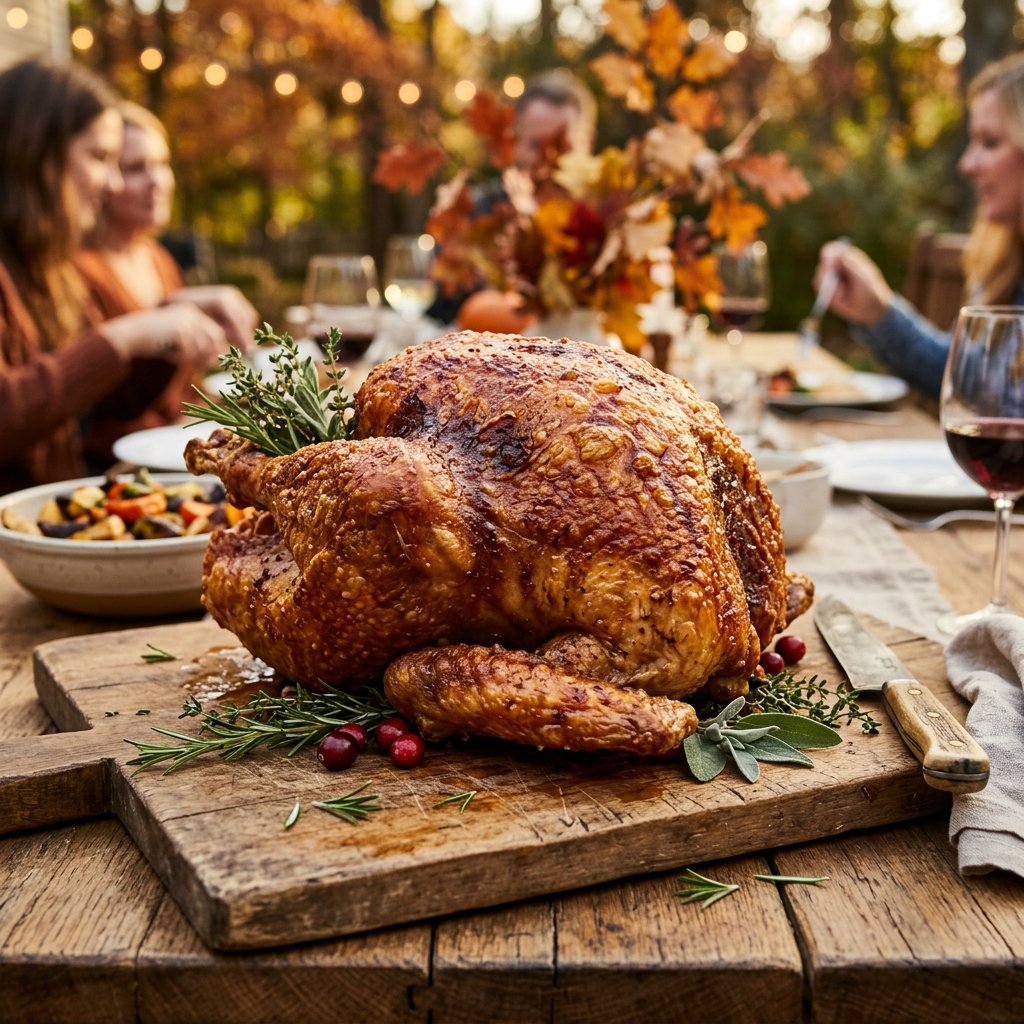
Deep-frying requires a completely thawed, dry turkey, an outdoor setup away from structures, a stable nonflammable surface, and a carefully measured oil level. Never improvise around water and hot oil.
Non-Negotiable Safety Rules
- Never fry indoors, in a garage, under an overhang, or on a wooden deck.
- Never place a frozen or partially frozen turkey in hot oil.
- Keep children and pets away from the cooking zone.
- Use protective clothing and a grease-rated extinguisher.
- Never use water on an oil fire.
Measure Oil Before Heating
Perform a displacement test with water before cooking day. Place the packaged or protected turkey in the unheated pot, add water until properly covered, remove the turkey, and mark the level. Dry the pot and turkey completely before adding oil.
Weight and Time
Most home setups are safest with relatively small birds. The Deep-Fried Turkey Calculator estimates oil and timing, commonly around 3–4 minutes per pound at the specified oil temperature.
Lowering the Turkey
Turn off the burner before lowering the bird slowly. Overflowing oil can ignite when it reaches the flame. Restore heat only after the turkey is stable and the oil level is safe.
Verify Doneness
Oil color and cooking time do not prove safety. Check the thickest breast and thigh areas for 165°F (74°C), then rest the bird before carving.
If any part of the setup is unstable, undersized, wet, crowded, or too close to a structure, choose oven roasting instead.
Sources
- Safe Minimum Internal Temperature ChartUSDA Food Safety and Inspection Service · Verified 2026-08-06
The 165°F (74°C) minimum internal temperature for poultry and stuffing.
- Turkey Fryer SafetyU.S. Fire Administration · Verified 2026-08-06
Outdoor fryer placement, fire prevention, and cooking safety.