
Turkey Leftovers: Safe Storage, Freezing, and Reheating
Store leftover turkey promptly, understand refrigerator and freezer timelines, and reheat portions safely without unnecessary drying.
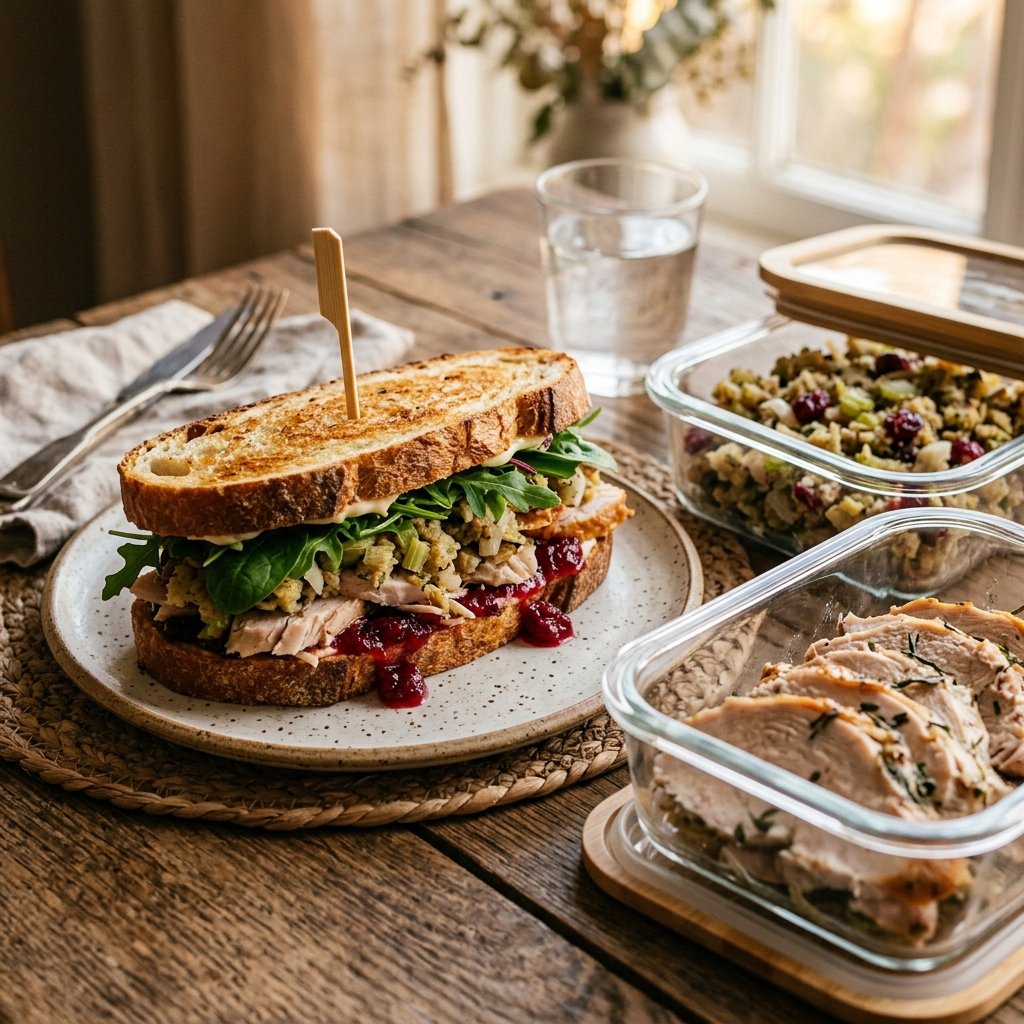
Handling post-holiday turkey properly is just as important as cooking the bird on Thanksgiving day. Cooked poultry is perishable and prone to rapid bacterial growth if left sitting at room temperature after dinner.
By applying the USDA’s core principles of prompt chilling, shallow storage, and reheating to a verified 165°F (74°C), you protect your family while ensuring remaining turkey retains maximum flavor and succulence for days or months to come.
The Critical 2-Hour Rule: The Temperature Danger Zone
The United States Department of Agriculture (USDA) defines the Temperature Danger Zone as the range between 40°F and 140°F (4°C and 60°C). Within this thermal band, foodborne bacteria such as Staphylococcus aureus, Salmonella, and Clostridium perfringens double in population roughly every 20 minutes.
- Two Hours Maximum: All cooked turkey meat, stuffing, and gravy must be sliced, packaged, and transferred into the refrigerator or freezer within two hours of removal from the oven.
- Hot Weather Threshold: If ambient room or buffet temperature exceeds 90°F (32°C), that window shrinks to one hour.
- Never Leave the Carcass on the Counter: Leaving a turkey carcass on the dining table or carving board while guests socialize over dessert is the leading cause of holiday food poisoning.
Storage Best Practices: Cooling Mechanics and Container Choice
Placing a dense mound of hot poultry or a deep stockpot of hot gravy directly into a refrigerator can actually compromise food safety. The center of a deep container cools slowly, allowing bacterial spore germination while simultaneously raising the ambient temperature of your refrigerator.
1. Strip the Meat from the Carcass
Do not store an intact whole carcass in the refrigerator. Carve all remaining breast meat, thighs, and drumsticks away from the skeletal frame immediately after dinner.
2. Use Shallow Storage Containers
Distribute sliced meat into shallow, airtight glass or BPA-free plastic containers with a maximum food depth of 2 inches (5 cm). Shallow packaging allows cold refrigerator air to penetrate quickly, bringing meat temperature below 40°F in under two hours.
3. Separate Components
Store white meat, dark meat, stuffing, and gravy in separate individual containers. Because gravy has high water activity and stuffing contains dense starches, they cool at different rates and spoil faster than dry roasted meat.
Refrigerator and Freezer Timeline Matrix
| Product | Refrigerator Shelf Life (≤40°F / 4°C) | Freezer Shelf Life (0°F / -18°C) | Best Uses |
|---|---|---|---|
| Cooked Sliced Turkey | 3 to 4 days | 2 to 6 months | Sandwiches, casseroles, pot pies |
| Cooked Turkey Gravy | 1 to 2 days | 1 to 3 months | Base for stews, shepherd’s pies |
| Cooked Stuffing | 3 to 4 days | 1 month | Reheated sides, waffle hash |
| Roasted Turkey Carcass | 2 days | 3 to 6 months | Slow-simmered bone broth, soups |
Check safe storage limits based on your specific leftovers volume using our Turkey Leftovers Calculator.
Freezing Leftover Turkey for Maximum Quality
Frozen cooked turkey remains microbiologically safe indefinitely when kept at 0°F (-18°C), but ice crystal formation and freezer burn degrade texture and flavor over time:
- Remove Air Completely: Use a home vacuum-sealer or heavy-duty freezer zip-top bags. If using bags, submerge the sealed bag in a bowl of water (the water displacement method) to force air out before zipping.
- Moisten with Broth: Drizzle a tablespoon or two of turkey stock over sliced white meat before sealing. The moisture barrier helps prevent dry freezer burn.
- Portion Smartly: Freeze in 1-pound or 2-serving portions rather than large blocks so you can thaw only what you need for a quick weekday meal.
- Label Clearly: Mark packages with the cut type and freeze date. Consume within 3 to 4 months for peak culinary quality.
Safe Reheating: Restoring Moisture Without Overcooking
Cooked poultry must always be reheated to an internal temperature of 165°F (74°C) measured with a digital food thermometer. Because the meat has already lost moisture during the original roast, gentle, moist heat is essential:
Method 1: Oven Braising (Best for Sliced Meat)
- Preheat oven to 325°F (163°C).
- Arrange sliced turkey in a single layer in a shallow baking dish.
- Pour a few tablespoons of turkey broth or leftover gravy over the meat.
- Cover the dish tightly with aluminum foil to trap steam.
- Warm for 20 to 30 minutes until a food thermometer registers 165°F in the center.
Method 2: Stovetop Skillet (Fastest for Sandwiches and Tacos)
- Add a splash of broth or butter to a skillet over medium heat.
- Add shredded or sliced meat and cover with a lid for 3 to 5 minutes to trap rising steam.
- Stir gently until heated through to 165°F throughout.
Method 3: Microwave (Single Servings)
- Place turkey on a microwave-safe plate and sprinkle with a few drops of water or broth.
- Cover with a damp paper towel or microwave food cover.
- Heat at 70% power for 1.5 to 2.5 minutes, rotating once, to prevent rubbery edges.
Reheating Gravy Safely
Bring leftover gravy and broth to a full rolling boil on the stovetop before serving, stirring constantly. Never consume leftover turkey or gravy that smells sour, feels slimy to the touch, or has remained in the refrigerator past the 4-day mark.
Sources
- Leftovers and Food SafetyUSDA Food Safety and Inspection Service · Verified 2026-08-06
Prompt refrigeration, storage duration, freezing, and reheating guidance.
- Safe Minimum Internal Temperature ChartUSDA Food Safety and Inspection Service · Verified 2026-08-06
The 165°F (74°C) minimum internal temperature for poultry and stuffing.