
How Long to Rest a Turkey & How to Carve It: Complete Guide
Learn exactly how long to rest turkey by weight, prevent moisture loss with loose foil tenting, and follow our step-by-step carving guide for maximum yield.
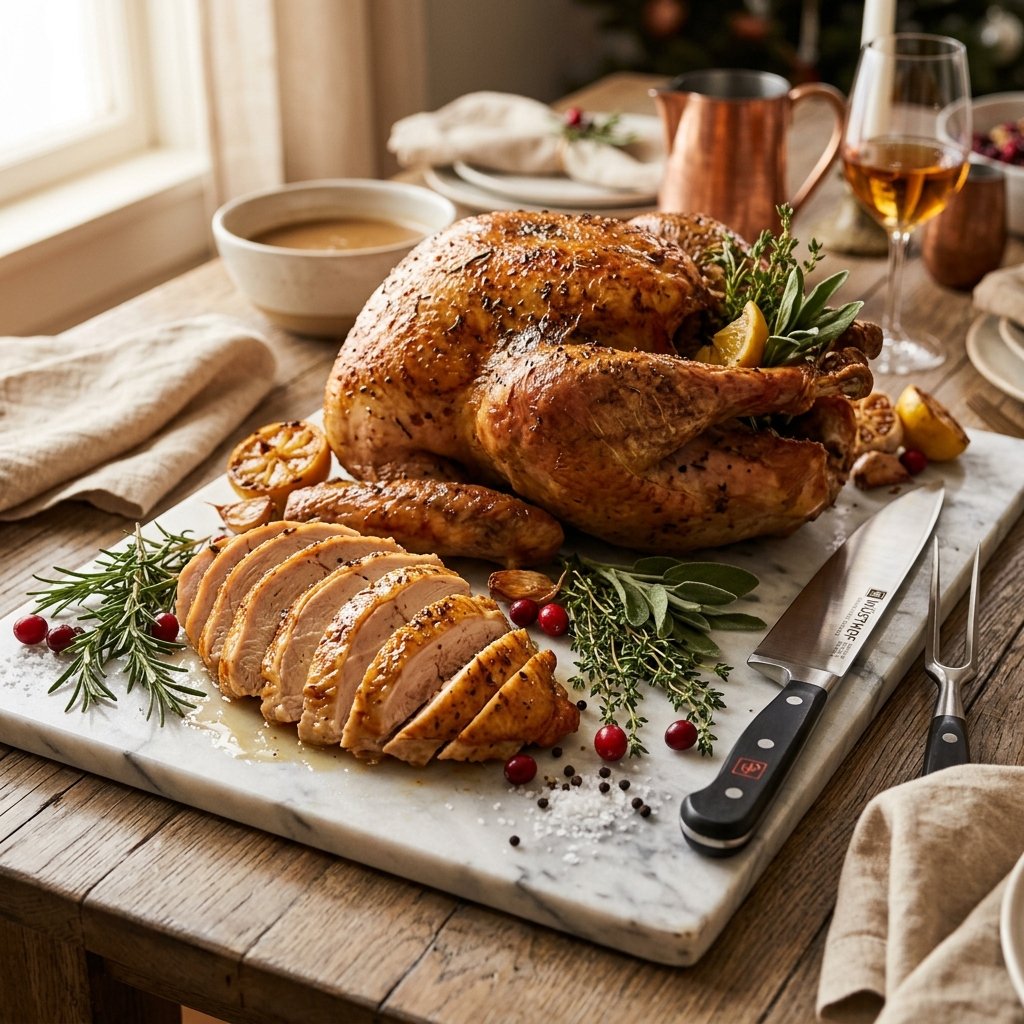
Resting a turkey is not merely a waiting period between the oven and the table; it is an active, essential thermodynamic stage of the cooking process. Slicing into a roast turkey immediately after pulling it from the oven causes pressurized cellular juices to flood onto the carving board, leaving the meat dry, stringy, and difficult to portion neatly.
As a general rule, rest a whole turkey for 20 to 30 minutes for birds under 14 pounds, and 30 to 45 minutes for birds weighing 15 to 22 pounds or more. During this interval, muscle proteins cool slightly, allow gelatinized collagen to thicken, and reabsorb moisture throughout the meat fibers. Furthermore, carryover cooking reliably raises the core temperature by an additional 5°F to 10°F, helping you hit the USDA-recommended safety threshold without overcooking.
The Science of Resting: Why Timing Matters
Inside a roasting turkey, the exterior meat reaches high temperatures while the center lags behind. Muscle fibers contract tightly as heat climbs past 140°F (60°C), forcing intracellular water outward toward the surface. If you carve immediately:
- Mass Moisture Evaporation: Internal steam rushes out instantly, robbing both white and dark meat of juiciness.
- Ragged Meat Slices: Hot muscle fibers lack structural firmness, resulting in torn, shredded slices instead of clean presentation portions.
- Loss of Carryover Heat Distribution: Thermal equilibrium across the outer meat and deep core requires 25 to 40 minutes to balance out.
Allowing the bird to rest on a heavy wooden or composite carving board lets the contracted muscle proteins relax, allowing free juices to settle and thicken.
Turkey Resting Time by Weight
| Raw Bird Weight | Minimum Rest Time | Optimal Window | Maximum Safe Rest | Notes |
|---|---|---|---|---|
| 8–12 lbs | 20 minutes | 25 minutes | 40 minutes | Small roasts and bone-in breasts drop heat faster. |
| 12–16 lbs | 25 minutes | 30–35 minutes | 45 minutes | Standard holiday centerpiece size; balanced carryover. |
| 16–20 lbs | 30 minutes | 35–40 minutes | 50 minutes | Substantial thermal mass retains heat comfortably. |
| 20–24+ lbs | 35 minutes | 40–45 minutes | 60 minutes | Heavy birds stay hot for over an hour without drying out. |
For a tailored timetable tailored to your specific roast weight, use our interactive Rest and Carving Calculator.
Managing Heat and Skin Crispness During the Rest
A frequent holiday pitfall is sealing a hot turkey tightly in heavy aluminum foil. Tightly wrapped foil traps ascending steam, rapidly turning shatteringly crisp roast skin into rubbery, soft skin.
- Loose Tenting Only: Shape a sheet of aluminum foil into an inverted tent and place it loosely over the breast. Leave the sides wide open so steam can escape freely while reflecting ambient radiant heat back downward.
- Warm Kitchen Resting: Place the carving board in an area protected from drafts, such as near the warm stove top. Do not rest the turkey under an air-conditioning vent or next to an open window.
- Keep Within Safe Food Boundaries: The USDA mandates that cooked poultry must never remain between 40°F and 140°F (the Danger Zone) for longer than 2 hours. Because resting takes 30 to 45 minutes, your actual carving and buffet service must conclude within the remaining 75 to 90 minutes before leftovers are refrigerated.
Essential Equipment for Clean Carving
Before making the first incision, prepare your workspace with proper tools:
- Carving Knife or Slicing Knife: An 8-to-10-inch granton-edge slicing knife or a freshly sharpened chef’s knife. Avoid dull serrated utility knives, which saw through skin and shred delicate breast meat.
- Carving Fork: A sturdy two-pronged fork to steady large cuts without piercing the meat repeatedly.
- Rimmed Carving Board: A solid cutting board fitted with a perimeter juice groove prevents flavorful drippings from spilling across your countertop.
- Clean Serving Platter: Warm the platter slightly in a low oven so sliced meat stays warm through dinner.
Step-by-Step Anatomical Carving Sequence
Traditional tableside carving often looks awkward because hosts attempt to shave paper-thin slices directly off the standing carcass. Professional kitchen practice separates whole anatomical muscle groups first, then cuts each portion against the grain on the flat board.
Step 1: Remove the Leg Quarters
Gently pull one drumstick away from the body. Cut through the skin between the leg and the breast until you reach the hip socket. Pop the hip joint out of its socket with your hands, then slice cleanly through the cartilage joint to remove the entire leg and thigh intact. Repeat on the opposite side.
Step 2: Separate Thighs and Drumsticks
Lay each leg quarter skin-side down on your cutting board. Locate the thin line of fat running across the joint between the drumstick and the thigh. Cut directly along this fat line through the ball-and-socket joint to separate the dark meat pieces cleanly.
Step 3: Remove the Wings
Pull each wing outward from the carcass. Find the shoulder ball joint, slice through the connecting tendon, and remove the wing. You can separate the drumette from the flat or leave them intact for serving.
Step 4: Remove Whole Breast Lobes
Find the central breastbone (the keel bone) running down the middle of the turkey. Make a shallow incision along one side of the bone, then follow the rib cage down with smooth strokes of your knife, gently pulling the meat away as you cut. Remove each breast half as a single, solid lobe.
Step 5: Slice Breast Meat Across the Grain
Place the entire boneless breast lobe skin-side up on your carving board. Slice across the grain into neat 1/4-inch to 1/2-inch medallions. Slicing across the grain shortens muscle fibers, ensuring every bite is tender and preventing the crispy skin from peeling off the meat.
Cooked Meat Yield Expectations
When purchasing and planning your holiday spread, raw carcass weight does not equal edible table meat:
- Whole Bone-In Turkey: Yields roughly 40% to 50% cooked edible meat relative to raw weight. A 16-pound whole bird typically produces 6.5 to 8 pounds of carved meat once bones, skin, and cartilage are subtracted.
- Bone-In Turkey Breast: Yields roughly 60% to 65% cooked meat.
- Boneless Turkey Breast: Delivers the highest efficiency at 75% to 80% edible yield.
Always reserve the stripped carcass, neck, and wings. Simmered with carrots, celery, onion, and herbs, they produce a rich, gelatinous turkey stock for next-day soups, pot pies, and gravies. Promptly pack all remaining meat into shallow containers and transfer them to the refrigerator within two hours of oven removal.
Sources
- Safe Minimum Internal Temperature ChartUSDA Food Safety and Inspection Service · Verified 2026-08-06
The 165°F (74°C) minimum internal temperature for poultry and stuffing.
- Leftovers and Food SafetyUSDA Food Safety and Inspection Service · Verified 2026-08-06
Prompt refrigeration, storage duration, freezing, and reheating guidance.