
Turkey for Large Groups: Planning 25 to 100+ Guests
Plan turkey volume, multiple birds, oven capacity, carving, holding, service style, and contingency buffer for large gatherings.
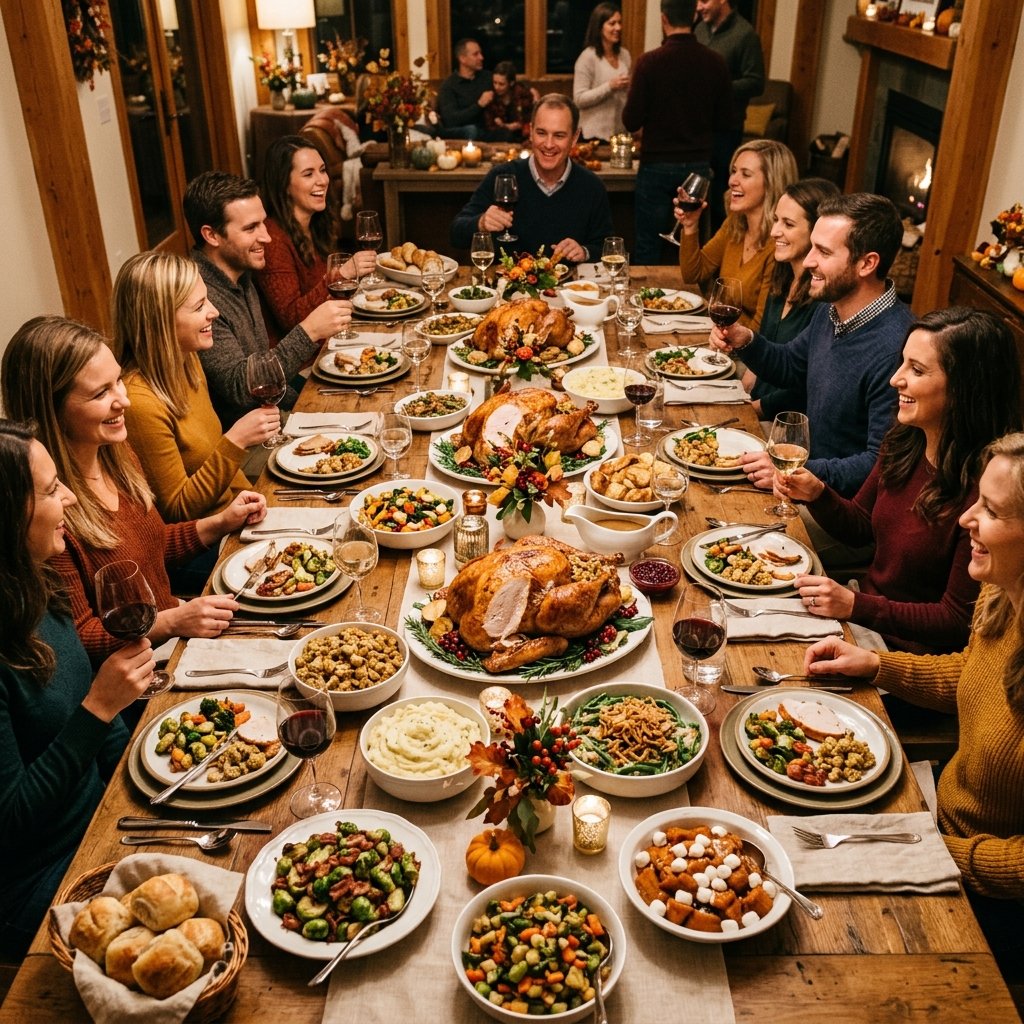
Hosting a holiday banquet, family reunion, or catered event for 25 to 100+ attendees requires shifting from residential home cooking instincts to commercial catering logistics. When cooking for crowds, challenges multiply around thawing storage, oven rack capacity, hot holding, and buffet line temperature safety.
Calculating requirements for large groups is not simply multiplying a recipe by four or ten. It demands orchestrating multiple birds, choosing the right mix of cuts, and establishing a synchronized cooking and carving schedule that keeps food safe and delicious.
Large Event Portion Matrix (25 to 100+ Guests)
The table below outlines raw poultry purchase targets, bird configurations, and estimated cooked meat yields across typical group sizes:
| Attendee Count | Whole Turkey Recommendation | Alternative Hybrid Strategy | Cooked Carved Yield |
|---|---|---|---|
| 25 Guests | 2 × 15–16 lb turkeys (30–32 lbs) | 1 × 14 lb whole bird + 1 × 8 lb bone-in breast | 14–16 lbs carved meat |
| 35 Guests | 3 × 14–15 lb turkeys (42–45 lbs) | 2 × 14 lb whole birds + 2 × 6 lb boneless breasts | 20–22 lbs carved meat |
| 50 Guests | 4 × 14–15 lb turkeys (56–60 lbs) | 2 × 16 lb whole birds + 3 × 8 lb boneless breasts | 28–30 lbs carved meat |
| 75 Guests | 5 × 16 lb turkeys (80–85 lbs) | 3 × 16 lb whole birds + 5 × 8 lb boneless breasts | 42–45 lbs carved meat |
| 100+ Guests | 7 × 15–16 lb turkeys (105–112 lbs) | 4 × 16 lb whole birds + 7 × 8 lb boneless breasts | 56–60 lbs carved meat |
To model specific ratios of whole birds versus breast roasts for your exact attendee count, use our Turkey Catering Calculator.
The Hybrid Cut Strategy: Whole Birds Plus Boneless Breasts
One of the best-kept secrets of professional caterers is the hybrid cut approach:
- Roast 1 or 2 Whole Turkeys for Presentation and Dark Meat: Provides traditional crispy skin, whole-bird visual centerpiece appeal, and rich dark meat (thighs and drumsticks) for guests who prefer it.
- Supplement with Ready-to-Roast Boneless Breasts: Boneless turkey breasts roast in half the time, require zero bone trimming, take up minimal oven space, and slice into clean, uniform medallions in seconds.
- Why this works: It eliminates the refrigerator bottlenecks of thawing five giant carcasses, prevents your oven from overloading, and drastically accelerates tableside carving.
Overcoming the Oven Capacity Bottleneck
Standard residential ovens can rarely accommodate more than one 20-pound turkey or two 12-to-14-pound birds without restricting airflow. When birds are packed too tightly against oven walls, circulating convective currents stall, adding 45 to 90 minutes to expected roasting times.
Diversify your cooking heat sources to avoid holiday traffic jams:
- Countertop Electric Roaster Ovens: Inexpensive, portable roaster ovens plug into any 120V outlet and comfortably roast a 16-to-22-pound turkey, freeing up your main oven entirely for stuffing, casseroles, and pies.
- Outdoor Smokers or Pellet Grills: A dedicated pellet grill or smoker adds deep wood-fired flavor while functioning as an auxiliary convection oven outdoors.
- Propane Fryers: Deep-frying one 12-pound turkey in 40 minutes outdoors lets you knock out a substantial portion of meat long before dinner service.
- Staggered Roasting and Holding: Roast your first two birds in the morning, carve them completely, and hold the sliced meat in warm chafing dishes moistened with turkey broth while your second batch roasts in the afternoon.
Professional Carve-Ahead and Hot-Holding Protocol
Never attempt to carve whole turkeys tableside during a 50-person banquet. Carving three or four whole birds on the spot creates a massive bottleneck, during which the first slices turn cold and dry.
The Caterer’s Carve-Ahead Technique
- Roast Early: Time your turkeys to finish roasting approximately 1.5 to 2 hours before dinner service.
- Rest Thoroughly: Allow each bird to rest for 35 to 45 minutes on the carving board.
- Pre-Carve Completely: Strip breast lobes and slice into clean medallions. Separate drumsticks, slice thigh meat, and discard skeletal waste into stockpots.
- Layer into Shallow Chafing Pans: Arrange sliced white and dark meat in 2-inch or 4-inch deep stainless hotel pans (steam table pans).
- Moisten with Hot Broth: Drizzle 1 to 2 cups of simmering turkey broth or pan drippings over the sliced meat. The warm broth seals moisture into the cut fibers and prevents heat lamps from drying out the meat.
- Cover with Foil: Seal pans tightly with heavy foil until dinner is called.
Buffet Line Food Safety Rules
Managing food safety across a large gathering requires vigilance:
- Hot Holding Minimum: 140°F (60°C): Chafing dishes with Sterno cans or electric steam tables must maintain an internal meat temperature of at least 140°F (60°C) throughout service. Stir or rotate meat occasionally to ensure even heat.
- The 2-Hour Exposure Limit: Any platter of carved poultry kept below 140°F at room temperature must be consumed, refrigerated, or discarded within two hours.
- Replenish with Fresh Pans: Never dump fresh, hot turkey directly onto an existing platter that has been sitting out. Replace empty serving pans with fresh, newly unsealed chafing inserts.
- Two-Sided Buffet Lines: For gatherings larger than 40 guests, arrange tables so guests can serve themselves from both sides simultaneously. A dual-sided buffet moves 50 guests through the line in approximately 12 to 15 minutes.
Sources
- Safe Minimum Internal Temperature ChartUSDA Food Safety and Inspection Service · Verified 2026-08-06
The 165°F (74°C) minimum internal temperature for poultry and stuffing.
- 4 Steps to Food Safety: Clean, Separate, Cook, ChillFoodSafety.gov / USDA FSIS · Verified 2026-11-04
Safe raw poultry handling, cross-contamination avoidance, and preparation hygiene.