
Whole Turkey vs. Turkey Breast: Which Should You Buy?
Compare yield, cost, cooking, carving, presentation, and portion rates for whole turkey, bone-in breast, and boneless breast.
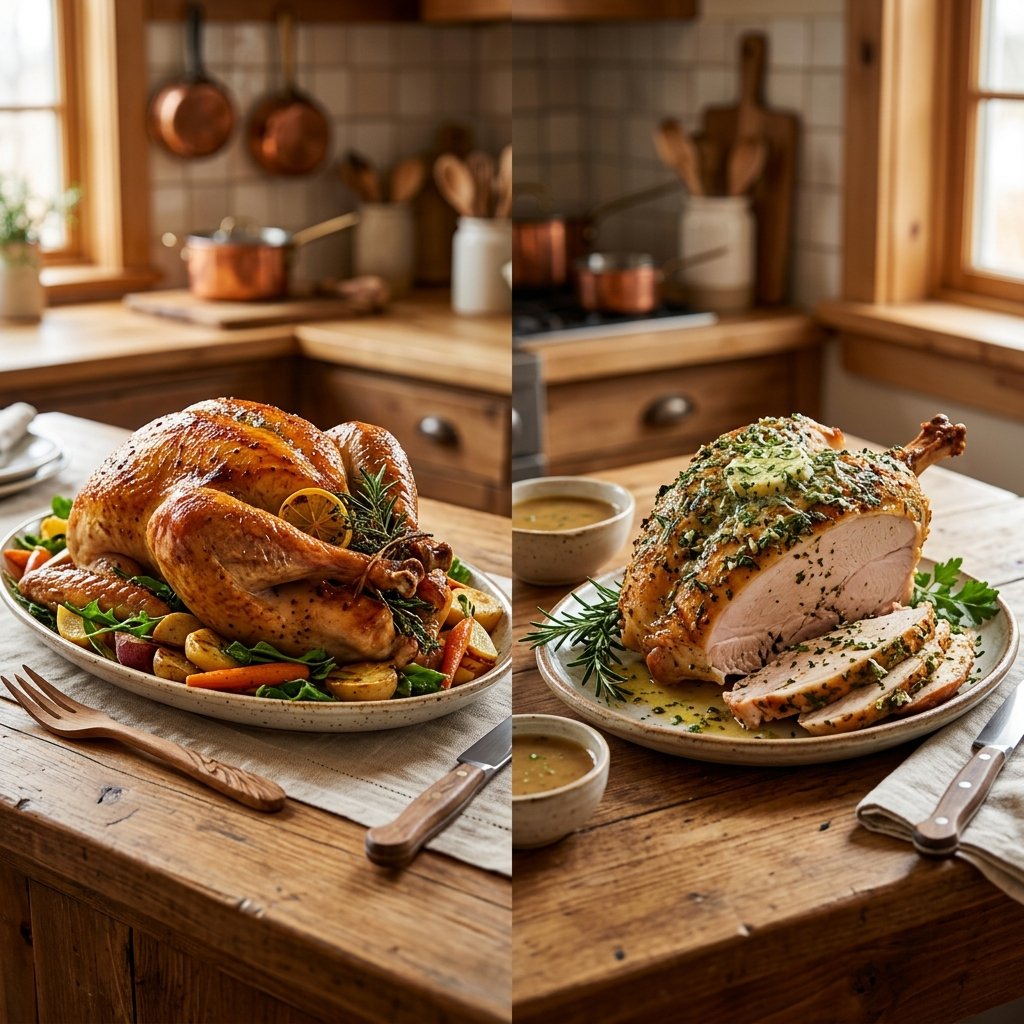
Choose a whole turkey when presentation, mixed white and dark meat, and stock-making matter. Choose turkey breast when the crowd prefers white meat, oven space is limited, or you want simpler carving and less bone weight.
Portion Rates
| Cut | Raw weight per adult | Best for |
|---|---|---|
| Whole turkey | 1–1.25 lb | Classic centerpiece and mixed preferences |
| Bone-in breast | 0.75–1 lb | White-meat groups with some bone protection |
| Boneless breast | 0.4–0.6 lb | Efficient yield and easy carving |
The Turkey Per Person Calculator applies different rates by cut and guest mix.
Yield and Waste
A whole turkey has the lowest edible yield by raw weight because the package includes the frame, legs, wings, skin, and trim. That is not always waste: the frame and trimmings can produce stock, and many guests value dark meat and crisp skin.
Boneless breast has the most predictable edible yield. It is easier to portion but provides no dark meat and less visual impact at the table.
Cooking and Carving
Whole birds take longer, require checks in several locations, and benefit from a substantial rest. Breasts cook faster and fit smaller ovens. Boneless breasts are easiest to slice evenly, while bone-in breasts can retain moisture well when handled carefully.
Whatever cut you choose, verify 165°F (74°C) in the thickest area and avoid touching bone with the thermometer probe.
Cost Comparison
Do not compare package prices alone. Compare cost per edible serving. A boneless breast can cost more per pound but produce less waste. A whole turkey may be cheaper per pound while requiring more total weight.
Decision Guide
- Buy whole turkey for tradition, mixed meat preferences, crisp skin, and stock.
- Buy bone-in breast for a smaller white-meat-focused gathering.
- Buy boneless breast for maximum convenience and predictable portions.
- Combine a smaller whole bird with an extra breast when white meat demand is unusually high.
Sources
- Safe Minimum Internal Temperature ChartUSDA Food Safety and Inspection Service · Verified 2026-08-06
The 165°F (74°C) minimum internal temperature for poultry and stuffing.